Autumn is the moment to think about spring. A few hours planting bulbs now gives months of colour from February to June, and fills the gap before perennials get going. Here is how we plan bulb planting for the gardens we design.
When to plant
- September to October: narcissi, crocus, snowdrops (or plant snowdrops "in the green" in spring), camassias and alliums.
- November: tulips. Planting them late, once the soil has cooled, reduces the risk of tulip fire disease.
Plan a succession
The trick is to choose bulbs that flower one after another so there is always something coming.
- February: snowdrops, Crocus tommasinianus, Iris reticulata.
- March: early narcissi such as 'February Gold' and 'Tête-à-tête', scillas.
- April: later narcissi, fritillaries, early tulips, Anemone blanda.
- May: late tulips, Camassia, Allium 'Purple Sensation'.
- June: Allium cristophii and 'Globemaster', whose seedheads last all summer.
How to plant
As a rule, plant bulbs at two to three times their own depth, pointed end up. Tulips can go deeper, around 20cm, which helps them come back year after year. On heavy London clay, add a handful of grit to the planting hole for drainage.
Planting for a natural look
Avoid straight lines and single bulbs dotted about. For a natural effect, scatter a handful of bulbs and plant them where they land, or plant in loose, irregular groups of 7 to 15. Repeat the same varieties through the border rather than using lots of different ones.
Bulbs in pots
For courtyards and terraces, layer bulbs in deep pots, a "bulb lasagne": tulips at the bottom, narcissi in the middle and crocus or muscari on top. The pot flowers for weeks as each layer comes through.
Bulbs in grass
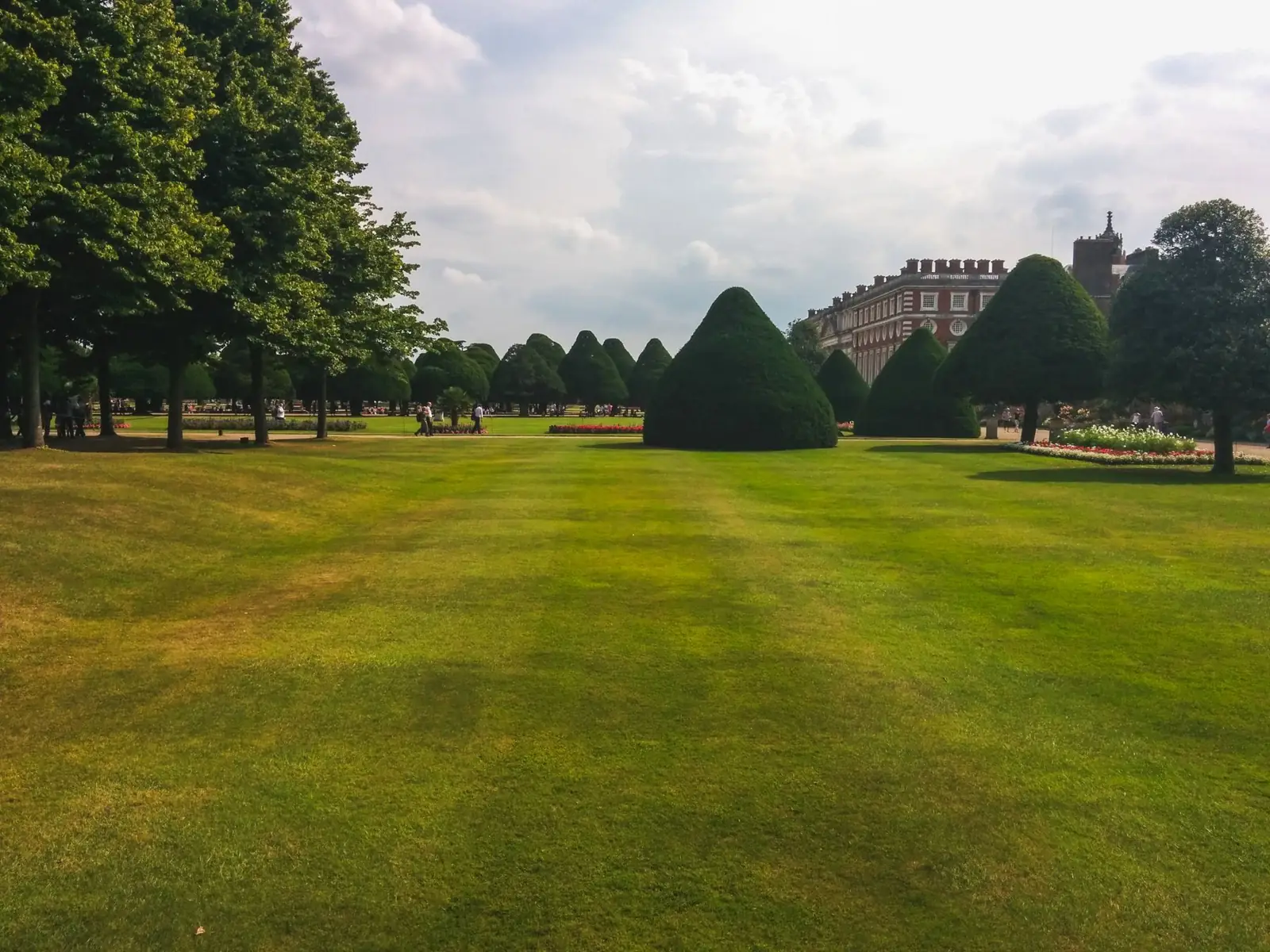
In family and country gardens, naturalise crocus, narcissi and camassias in areas of lawn. Leave the grass uncut until the bulb foliage has died back in early summer, then mow paths through it.
Bulbs in lawns and borders feature in many of our family garden designs.